The Chant Sheet That Found Me Twice | Kirtan, India & Earthsong
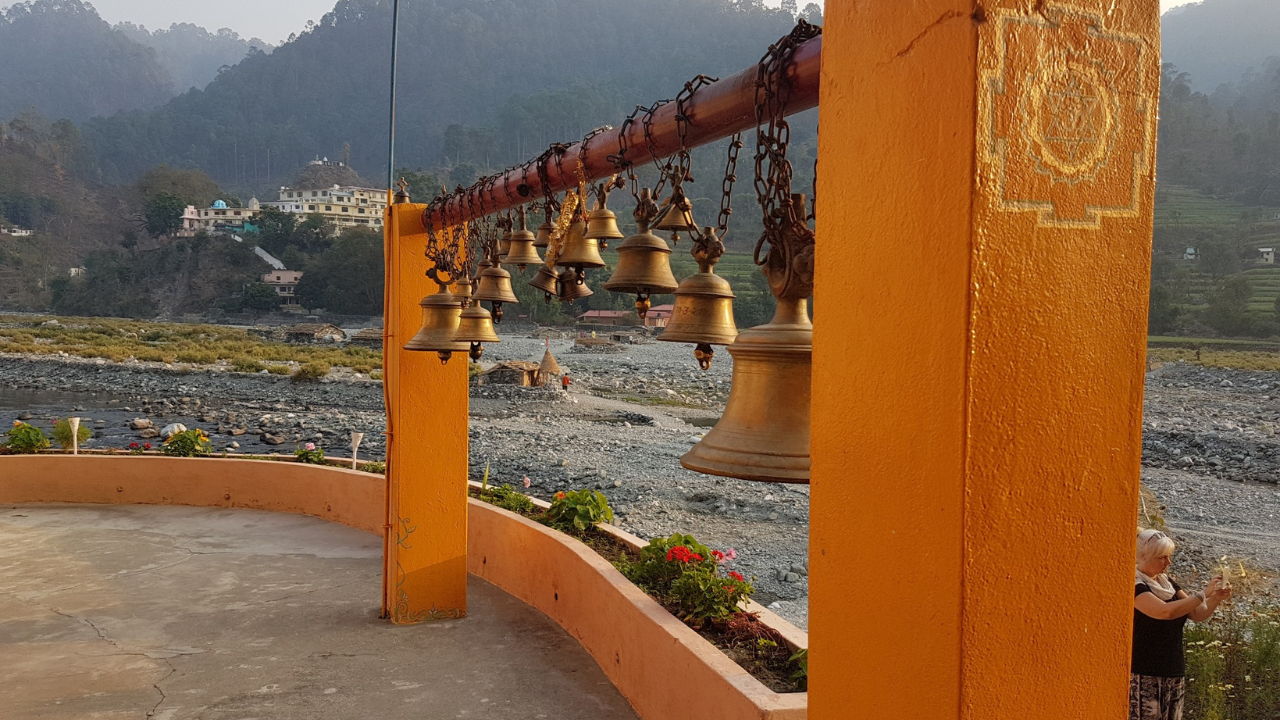
Temple bells at Haidakhan, Uttarakhand, India
A festival tent in Ireland, an ashram in the mountains of India, and what it taught me about trusting the breadcrumbs.
Where it began
It was 2007, the very first Earthsong festival, and I wanted to experience everything it had to offer. Earthsong is a drug- and alcohol-free gathering in the Irish countryside where people of all ages sing, dance and learn together, with all the music made by the campers themselves.
Early one morning, I wandered into the kīrtan tent, curious to see what was happening.
Inside was a world of colour. Indian fabrics, flags, images of deities, incense, and a wonderful woman called Madhuri sitting at her harmonium, accompanied by a drummer and others playing shakers and percussion.
She handed us each a sheet of chants. There were no lengthy introductions or explanations. She simply began to sing. And we followed.
I stumbled over the unfamiliar words, trying to find my way into the melodies. But gradually, through the repetition, the rhythm of the drums and the voices around me, something began to happen.
I found myself tuning into whatever was being sounded, both outside and inside.
I laughed. I cried. I was moved in ways I couldn’t explain. I hadn’t a clue what I was chanting, or why it was affecting me so deeply.
I was completely smitten. Every morning of that festival, I couldn’t wait to get up and find my way back to the kīrtan tent.
Over the following years, I returned to Earthsong and to Madhuri’s morning kīrtans. Eventually, I asked if I could record some of the chanting and take one of her chant sheets home, so I could continue singing between festivals.
Something had been awakened in me that first morning, long before I knew very much about the tradition of kīrtan. Those songs became part of my life.
A journey to India
Some years later, in 2018, I travelled to India for the first time.
I spent some time in Rishikesh, where there were plenty of opportunities to experience kīrtan, the call-and-response chanting of sacred songs. But I found the town busy, and although there were beautiful experiences to be had, I longed for something more immersive. I wanted to be somewhere that chanting was woven into everyday life, rather than something I attended for an hour or two.
Then, quite by chance, I met a woman who had heard about an ashram in the mountains. We decided to go together.
And so we travelled into the Kumaon hills of Uttarakhand, to Haidakhan Vishwa Mahadham, an ashram associated with Haidakhan Baba. We stayed for two weeks.
Life there was simple, with a daily rhythm of chanting, aarti (the offering of light), meditation, shared meals and seva, which means offering our time and energy in service. The kīrtans were fabulous. I loved returning to the same sounds day after day, experiencing them as part of the ordinary rhythm of life.
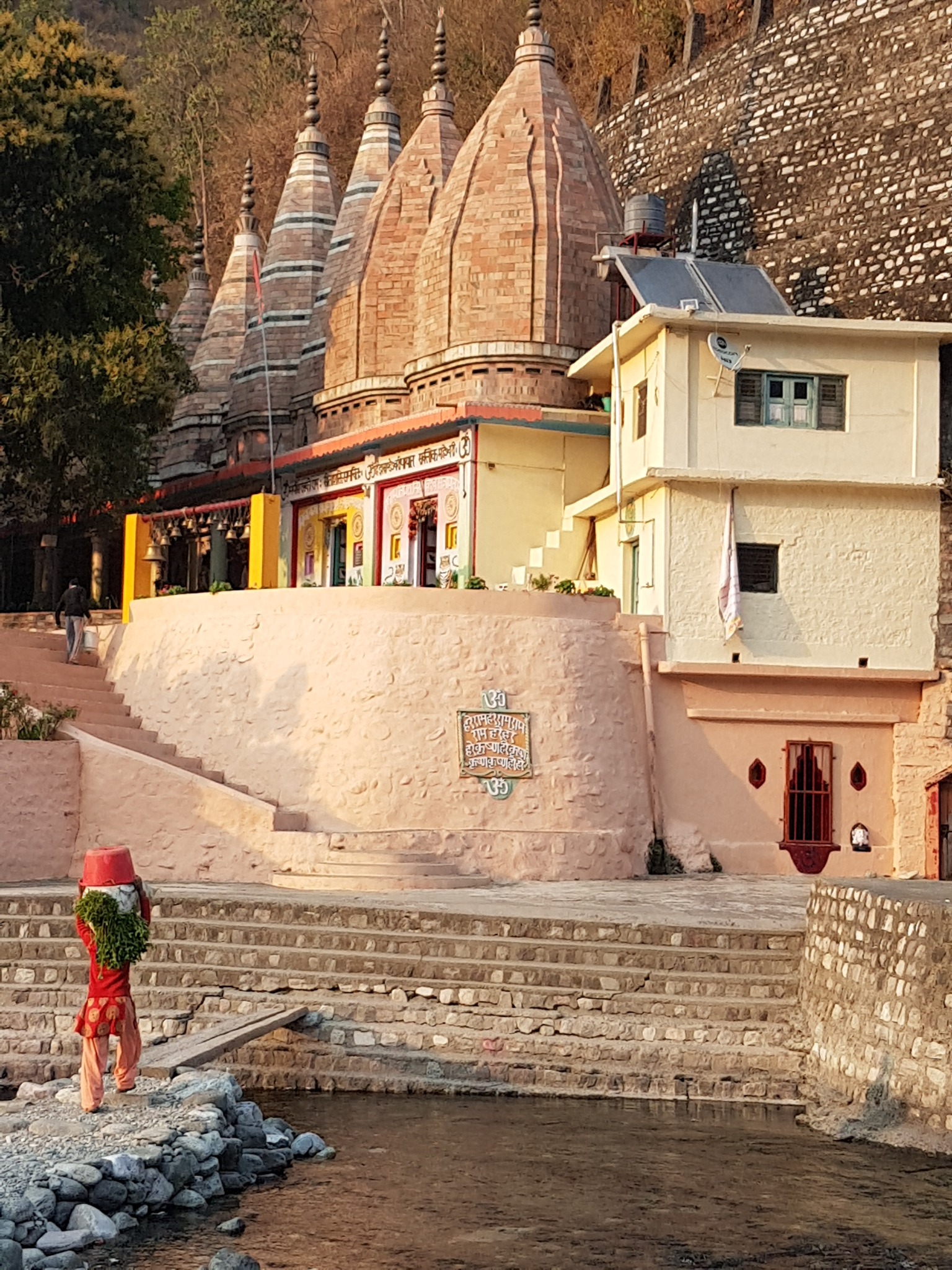
The ashram buildings at Haidakhan
Working in the gardens
Everyone at the ashram was given a seva job, and one of ours was working in the gardens.
It was hot, but I loved being outdoors. We cleared weeds and moss from the pathways, caring for a garden that others had created and tended before us. I met some of the people who had made it, including the woman who had originally designed it, and we talked as we worked.
There was something deeply satisfying about the work. It felt good to be offering something, rather than simply being there as a visitor. The chanting was wonderful, but so too was this ordinary shared activity. In its own way, it felt like another expression of the same practice.
I had no idea yet how much that garden designer would turn out to matter to the story.
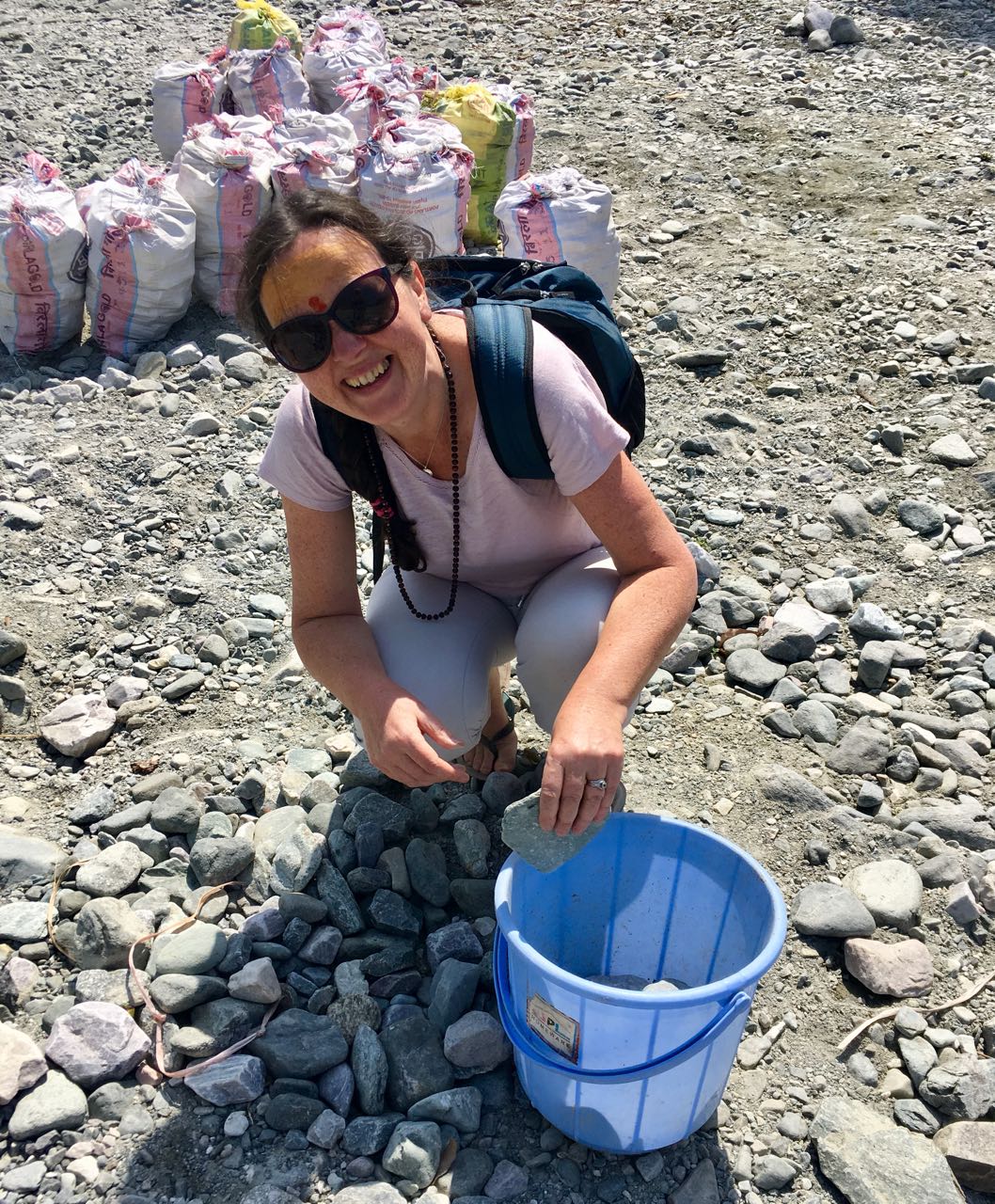
Seva in the garden (selfless service)
The same chant sheet
But there was something else about that visit that I will never forget.
When I first arrived at the ashram and joined the chanting, someone handed me a sheet with the words of the chants.
I looked down. And there it was.
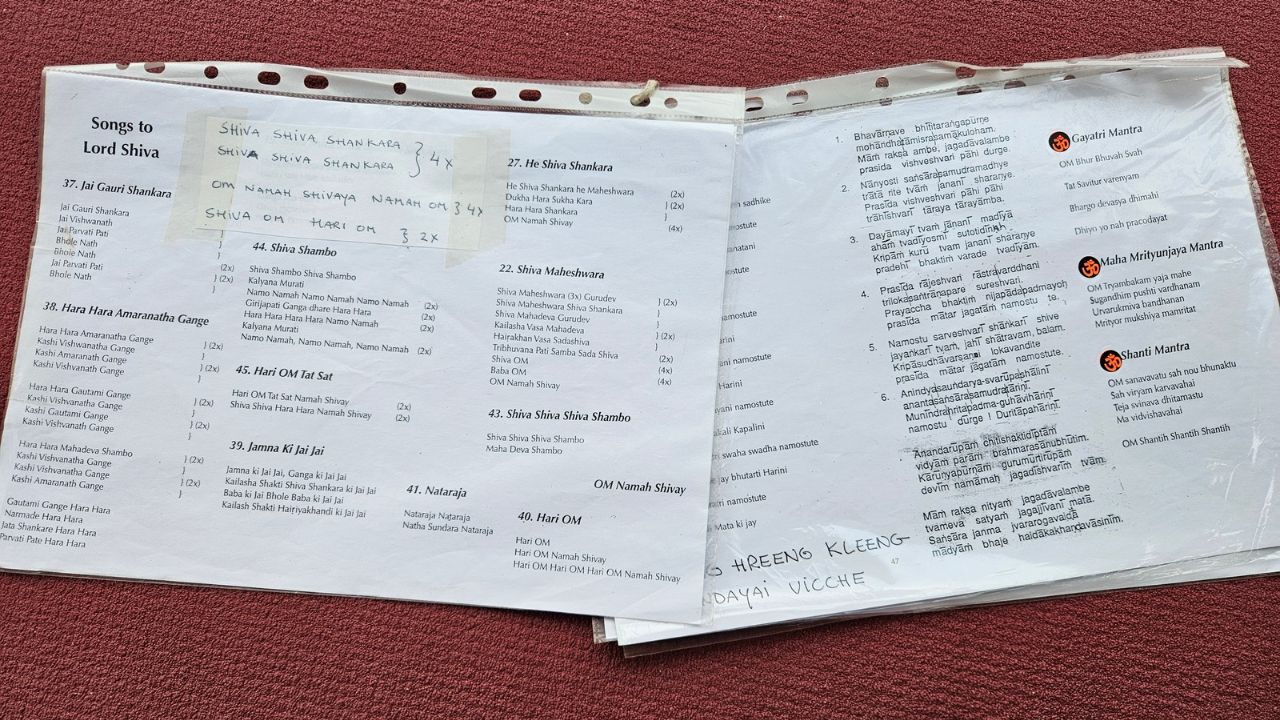
A photocopy of exactly the same chant sheet Madhuri had given me at Earthsong, all those years before.
I didn’t need to read it to know. I knew that sheet intimately, and I recognised it immediately.
Later, I talked with the people who ran the ashram, and they knew Madhuri well. So did the woman who had designed the garden. This was the very place where Madhuri had spent so much time and learned her chanting, before bringing those songs back to Ireland.
All those years earlier, I’d wandered into a tent at a festival, with no idea what I was walking into. Something about those chants had touched me so deeply that I returned to them again and again. And now, without ever having planned it, I was sitting in the place from which those very chants had travelled.
It was an extraordinary feeling of recognition. I had found my way back to their source.
It felt like coming home.
I haven’t seen Madhuri since, but when I wrote to tell her this story, she replied with characteristic generosity and gave me her blessing to share it.
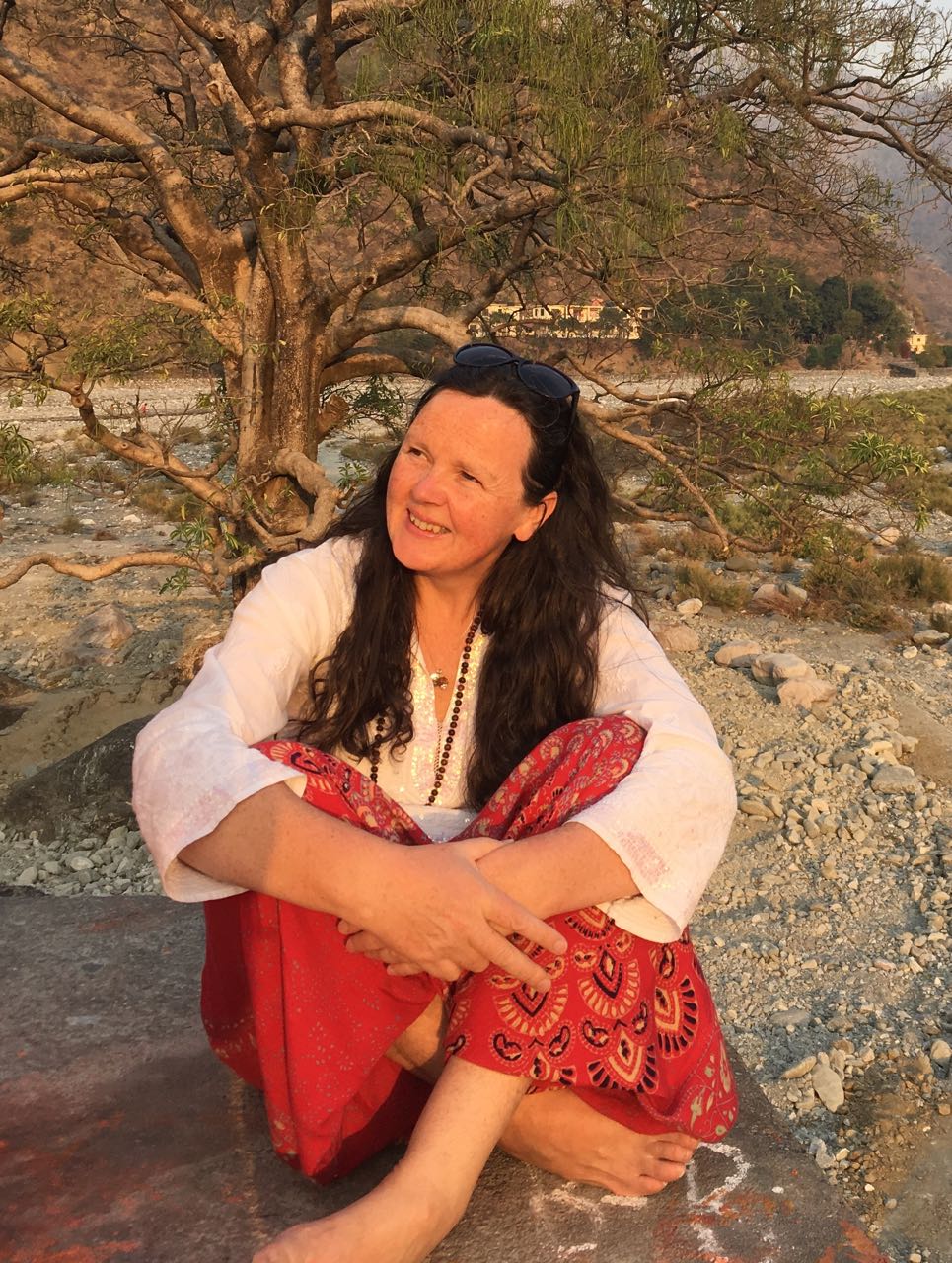
Beside the river at Haidakhan
What the breadcrumbs asked of me
I’ve thought about that experience many times since.
How a song travels from one place to another, carried by people who have been touched by it. How a melody or a few repeated words can find their way into another person’s life, sometimes with consequences neither could have imagined.
Madhuri had brought those chants from India to Earthsong. I happened upon them one morning, followed something that stirred in me, and kept returning. Years later, a chance encounter led me to an ashram in the mountains, where I discovered the very same chants.
None of it was planned. And yet, looking back, I can see the little steps along the way.
I’ve come to think of these as breadcrumbs: those moments, encounters and invitations that life places before us. Sometimes we notice them, sometimes we don’t. Sometimes we follow them without knowing where they might lead.
My Sanskrit teacher, Lucy Crisfield of Original Wisdom, once offered me an understanding of karma that has stayed with me: to meet what is in front of me. And with it, a question:
My life stands before me. Is this truly what I am most desirous to attain?
I continue to reflect on that question.
Trusting life isn’t simply sitting back and waiting for things to happen. It doesn’t mean believing that everything happens for a reason. It’s about becoming an active participant: being present enough to recognise what calls to us, curious enough to explore it, and willing to take a step without knowing where it might lead.
Looking back, each little step asked something of me. To enter the tent. To join in, even when the words were unfamiliar. To ask Madhuri for the chants. To trust a chance encounter with someone who suggested an ashram I’d never heard of.
And there were gifts I couldn’t possibly have anticipated.
The songs continue to travel
That first morning, I hadn’t a clue what I was chanting. These days, studying Sanskrit with Lucy, I’m learning what the words mean, and listening more deeply to the sounds themselves. It feels like another circle closing.
Recently, I received a lovely message from a poet I’d met at Earthsong, who told me that she often thinks of our morning kīrtans and wishes they could happen every day.
She’d also rediscovered a Mark Nepo poem I’d given her, covered in her own little poems, scribbled while standing in a queue without a notebook. I loved imagining that sheet of paper travelling around in her pocket, becoming a place for more poems to emerge.
She was thinking about travelling to India and wondered where she might go to deepen her kīrtan practice. Her message brought all these memories back.
Here was someone I’d met at a festival, carrying something of those morning chants with her, just as I had all those years before. From an ashram in India, through Madhuri to Earthsong, into my own life, and now into the lives of others.
With Earthsong’s twentieth anniversary approaching in 2027, I’ve been thinking about that very first morning, and all the songs, friendships and unexpected paths that have unfolded since. I couldn’t have imagined then that I would one day be sharing the morning kīrtans myself. I now run kīrtans in my home, and in other places when I’m invited. If you’d like to join one, you’ll find my upcoming gatherings, including Kirtan, Heart Songs & Poetry, on my events page at listeningfield.ie/events.
Of course, I’ll tell her about Haidakhan and the places where she might find kīrtan. But the most important thing I want to say is:
Let India find you.
Follow what draws you, make your plans, but leave room for the unexpected. For the person you meet, the conversation you hadn’t anticipated, the invitation that takes you somewhere you hadn’t imagined.
And this isn’t only about India. It’s about trusting life enough to meet what is in front of us. To pay attention to the breadcrumbs, to follow what stirs something within us, and to participate wholeheartedly without needing to know how things will unfold.
Not everything that comes our way is ours to follow. But we can learn to recognise what calls to us.
We are shaped by our experiences, but we are not confined to them.
At the ashram
Haidakhan Vishwa Mahadham is in the Kumaon hills of Uttarakhand, northern India. More information: https://haidakhandisamaj.in/
Join our mailing list to receive the latest news and updates from the Listening Field.
We take your privacy very seriously & will only send you the Newsletter and supporting emails. Read our Privacy Policy