Every Step A Blessing
Every Step a Blessing
On recognising the sacred in ordinary life
At a sound bath, a woman spoke about needing a priest to bless something—perhaps water, or a person.
I found myself saying, “But we all have the ability to bless. We all have a direct line to God.”
It stayed with me.
I was not dismissing the place of a priest, a church or a particular ritual. Formal blessings can carry great depth, meaning and tradition. But the conversation reminded me that blessing may also be much closer and more ordinary than we sometimes imagine.
Perhaps blessing is not something held apart from everyday life. Perhaps it is one of the ways we meet it.
Blessing as attention
A blessing does not always require special words.
It can be present in the way we greet another person. In the care with which we touch something. In the attention we offer a tree, a bird, a bowl of water or the ground beneath our feet.
It may be spoken aloud, whispered, sung or sounded. It may also be held in silence.
Perhaps the blessing begins before words, in the quality of our attention: the moment in which we pause long enough to recognise the life before us and meet it with care.
Idle and blessed
Mary Oliver’s poem The Summer Day is one I often bring into my work. In it, she describes herself as “idle and blessed.”
Those two words together were a revelation to me.
When I was young, as for many others, idleness was something we were warned against. There were sayings about the dangers of idle hands. We were not allowed to loiter, rest or daydream. There was always something useful to be done, and keeping busy carried its own kind of virtue.
So the possibility of being both idle and blessed was a huge opening. The words had always seemed almost contradictory. How could idleness be blessed?
Yet Mary Oliver makes space for another kind of idleness—not neglect or indifference, but receptive attention. The kind of spaciousness in which we can stop long enough to notice a grasshopper, the movement of the light or the living world immediately around us.
She performs a similar alchemy with “wild and precious” near the end of the poem. Wild suggests something untamed and unconstrained; precious, something deeply valued and carefully held. She was such a master of placing words together so that each one opened the other.
Perhaps blessing requires something of this sacred idleness: a willingness to pause, to loiter for a moment, to stop measuring our worth through usefulness and allow ourselves simply to be present.
Perhaps it is there, in that unhurried attention, that we begin to realise we are already blessed.
Blessing woven into language
In a conversation with Nóirín Ní Riain, she spoke of how deeply blessing is woven into Irish language and life.
Dia dhuit—God be with you.
Beannacht Dé ort—the blessing of God be upon you.
The Sanskrit greeting namaste also comes to mind. It is often translated as “I bow to you.” More literally, it is formed from namaḥ, carrying the sense of bowing, reverence or salutation, and te, meaning “to you.”
It is a word that is sometimes used casually—and sometimes given meanings that are not actually present in the Sanskrit. Yet spoken with awareness, it holds a simple and profound gesture: reverence offered to the person before us.
The Irish and Sanskrit traditions are distinct, but both remind me that a greeting can be more than a social habit. It can become an act of attention, respect and recognition.
Nóirín spoke of blessing ourselves, blessing one another and blessing everything around us—the trees and birds as we walk, each step a blessing.
She then spoke these lines from W. B. Yeats’s poem Vacillation:
My body of a sudden blazed;
And twenty minutes more or less
It seemed, so great my happiness,
That I was blessed and could bless.
There is something beautiful in that movement: to know ourselves as blessed, and from that knowing to become capable of blessing.
To recognise what is already there
Galway Kinnell expresses something of this in his poem Saint Francis and the Sow:
“…for everything flowers, from within, of self-blessing;
though sometimes it is necessary
to reteach a thing its loveliness.”
Perhaps this is part of what it means to bless: to recognise and name the loveliness, dignity or sacredness that is already there.
Blessing does not bestow worth upon something that had none. It does not require us to fix, improve or change what is before us. It asks us to see more deeply.
Sometimes another person may need to be reminded of their loveliness. Sometimes the earth may need to be met with gratitude rather than taken for granted. Sometimes our own body—the body that has carried us through loss, change, illness, joy and ordinary days—may need to be welcomed back into kindness.
Blessing a troubled world
Nóirín also reminded me that whenever we gather, there must be some meaning in it for the wider world.
At a time when there is so much chaos and suffering, blessing can sound too small. Yet to bless the world is not to deny its pain or pretend that everything is well. It is a refusal to withdraw our care.
We may not always know what action to take. But we can begin by attending, by refusing to turn away and by allowing the care awakened in our practice to move beyond ourselves.
A blessing offered in this way is not an escape from the world. It is a way of remaining in relationship with it.
A simple practice of blessing
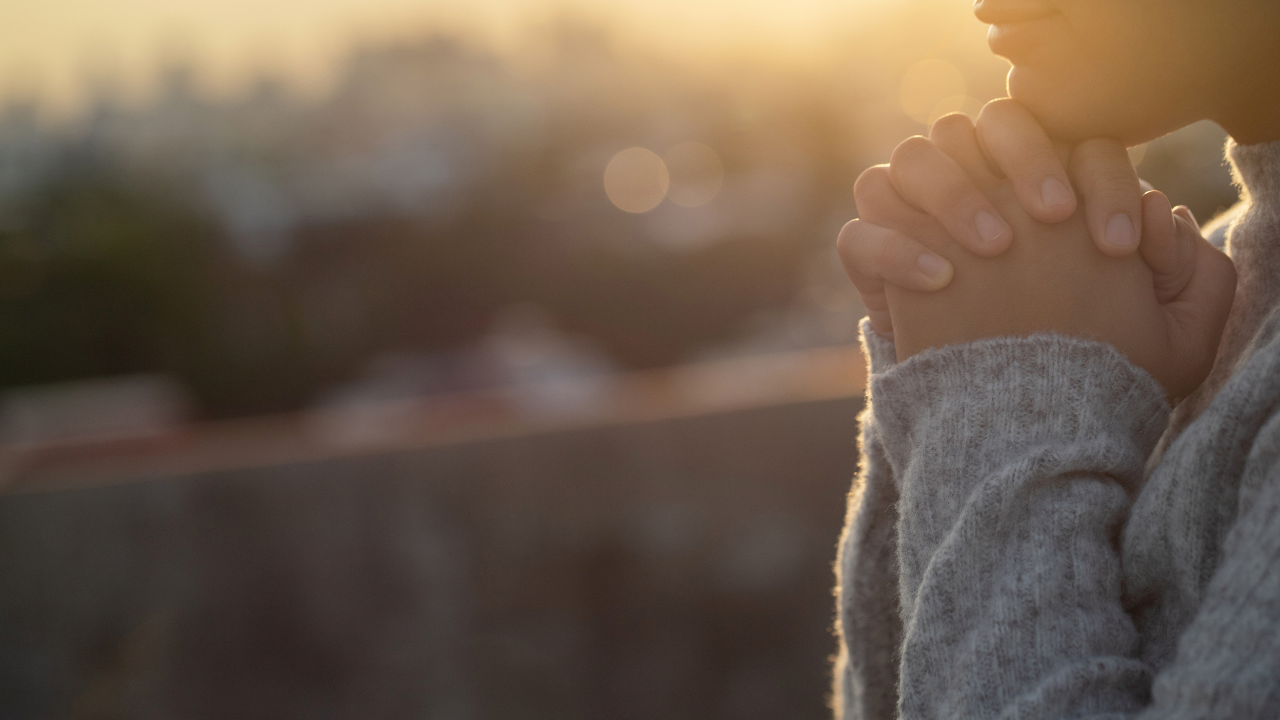
You might like to pause for a moment.
Feel the ground beneath you and notice the movement of your breath. Bring to mind a person, place, creature or part of the living world you would like to bless.
There is no need to find perfect words. You might simply offer:
May you be held.
May you be protected.
May you remember your own loveliness.
Beannacht Dé ort.
Or you may say nothing, allowing the blessing to be carried through your attention, breath or touch.
And perhaps include yourself.
What might you bless today?
Your home. Your food. The water you drink. Someone you love. Someone with whom you struggle. Your own body. The land beneath you.
The trees and birds as you walk.
Each step.
And perhaps, for a moment, our troubled world.
May you remember that you are blessed—and that you, too, can bless.
Join our mailing list to receive the latest news and updates from the Listening Field.
We take your privacy very seriously & will only send you the Newsletter and supporting emails. Read our Privacy Policy