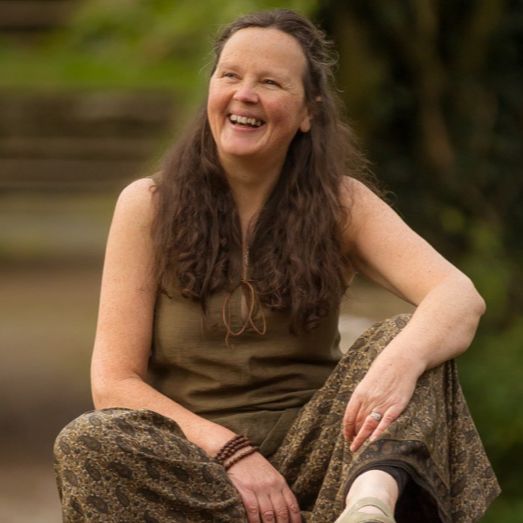
Is Sound Healing with the Voice Training Right for You?

Perhaps you have experienced the effect of sound or voice in your own life and feel drawn to understand it more deeply.
You may already work with people and be curious about bringing voice and sound into your practice. You may be a musician, yoga teacher, therapist or bodyworker. Or perhaps you are standing at the beginning of an entirely new direction and cannot yet say where it might lead.
The Sound Healing with the Voice Practitioner Diploma is a year-long professional training accredited by the College of Sound Healing. It offers practical methods and theoretical understanding, but it is about more than acquiring a collection of techniques.
It is also a practice of listening, presence, discernment and learning how to accompany another person responsibly.
Who Is the Training For?
People come to the training from many different backgrounds.
It may be for you if you:
-
Already work as a therapist, yoga teacher, bodyworker, voice practitioner, musician or complementary health practitioner
-
Want to integrate voice and sound into your existing work
-
Have experienced Sound Healing personally and feel called to study it with greater depth
-
Want to develop the skills required to offer professional one-to-one Sound Healing sessions
-
Are interested in voice, embodiment, relationship, contemplative practice and deep listening
-
Feel drawn to the human voice but carry fear, judgement or uncertainty about your own sound
-
Are considering a new professional direction, even if its eventual shape is not yet clear
Some participants arrive with considerable professional or musical experience. Others begin from a personal relationship with sound and gradually discover that they would like to work with others.
You do not need to have everything decided before you begin.
Do I Need to Be a Singer?
No singing or musical experience is required.
This is not performance training, and you do not need to believe that you have a “good” voice. We begin with the voice that is already here.
You will, however, need a willingness to participate: to breathe, hum, tone, chant, listen and gradually become more familiar with your own voice.
The voice is not something you learn to use from a distance. It is part of you, and your relationship with it forms an important part of the training.
Why Is the Human Voice Central?
The human voice is unlike any other instrument.
It carries vibration, but it also carries breath, emotion, intention, vulnerability and presence. From our earliest experiences of relationship, we respond to voices long before we understand the meaning of words.
During the training, you will explore humming, toning, vocal resonance, vowel sounds, chant, mantra, harmonics and other approaches to therapeutic voice.
Selected instruments are also included, but the human voice remains the primary instrument throughout the year.
What Does the Training Involve?
The course consists of five modules held over six in-person weekends.
Across the year, you will explore:
-
Voice, breath, resonance and pure tone
-
The principles and practice of Sound Healing
-
The structure of a one-to-one session
-
Music, rhythm and musical intervals
-
The Indian scale
-
Sanskrit sounds and bīja mantras
-
Sound and the chakra system
-
Silence, attention, intention and relationship
-
Professional boundaries, ethics and client care
-
Trauma-aware and responsive practice
-
Your own grounding, voice and reflective practice
The training is experiential. You will give and receive Sound Healing sessions, practise different approaches and learn through direct experience as well as study.
The Learning Continues Between Weekends
The course does not happen only during the six training weekends.
Between modules, you will practise, complete written reflections and gradually begin offering case-study sessions. To receive the Practitioner Diploma, students complete:
-
The required written work following each module
-
36 case-study treatments
-
A supervised practical assessment
-
A final extended essay
-
The College of Sound Healing’s professional requirements for graduation
Confidence does not come from hearing a method explained once. It develops through practice: meeting different people, noticing what happens, receiving feedback, reflecting on your work and returning with better questions.
The case studies and written work are therefore an essential part of the training rather than something added at the end.
Learning What to Do—and How to Be
You will learn practical, structured methods for offering Sound Healing sessions.
You will also develop the capacity to listen and respond: to notice what is happening for the person in front of you while remaining aware of your own assumptions, reactions and desire to help.
At its heart, this work is not about doing healing to another person.
The practitioner does not arrive with all the answers or with the intention of fixing someone who is broken. Our role is to create and sustain the best conditions we can: a professional, compassionate and attentive space in which another person feels received and heard.
Sometimes sound is called for.
Sometimes silence.
Sometimes we offer.
Sometimes the most skilful choice is to pause or hold back.
This discernment is why the training is about much more than learning techniques.
Personal Practice and Professional Formation
Working with your own voice can be personal and revealing. You may meet judgement, uncertainty, confidence, joy, resistance or parts of yourself that have not previously had much room for expression.
Personal experience forms part of the learning, but the training is not therapy, and personal experience alone does not qualify someone to work professionally with others.
The invitation is to develop both: a deeper relationship with your own voice and the knowledge, boundaries and professional awareness needed to accompany another person responsibly.
You do not need to arrive perfectly confident, permanently calm or completely “healed.”
You do need a willingness to practise, reflect, participate fully and take responsibility for your learning.
Is This the Right Time for You?
Before enrolling, you might ask yourself:
-
Am I willing to explore my own voice, even if I feel uncertain about it?
-
Can I commit to attending the six weekends?
-
Am I able to make time for practice, written work and case studies between modules?
-
Am I willing to give and receive feedback?
-
Am I curious about both the practical techniques and the deeper responsibility of working with another person?
-
Am I open to learning without needing to have all the answers?
You may feel a clear professional calling. You may simply know that sound has a place in your life and want to discover where the path leads.
Both are valid places from which to begin.
Beginning with Weekend One
Weekend One may be attended as a standalone introduction.
It offers an opportunity to experience the voice practices, receive an introduction to Sound Healing and get a sense of the teaching and learning environment before deciding whether you wish to continue with the full diploma.
Explore the Training
The main Sound Healing with the Voice Training page contains the current dates, fees, curriculum, assessment requirements and booking options.
If you have questions about whether the training is suitable for you, you are also welcome to contact me and arrange a conversation.
You do not need to know exactly what kind of practitioner you may become.
You need curiosity, commitment and a willingness to listen.
Join our mailing list to receive the latest news and updates from the Listening Field.
We take your privacy very seriously & will only send you the Newsletter and supporting emails. Read our Privacy Policy